


Our Vision for Brain–Machine Interfaces

How can we communicate with the nervous system without adding invasive hardware or restricting natural behavior?
A recent feature in EU Research (Link) highlights work from our Neuroengineering Lab at Tel Aviv University addressing this challenge. Our research combines soft bioelectronics, electrophysiology, neural engineering, computational modeling, and wearable technologies to develop new ways of stimulating the nervous system and measuring its response.
A major focus is our ERC-funded OuterRet project, which explores new approaches to retinal stimulation for people affected by retinal degeneration. Rather than considering stimulation simply as the delivery of electrical current, we are investigating where, when, and how the retina should be stimulated to generate meaningful neural responses. The challenge is substantial: stimulation involves many parameters—including electrode location, amplitude, frequency, and timing—and the optimal combination is still poorly understood.
An equally important challenge is determining whether stimulation has produced the intended response. Patient reports of visual perception are essential, but they are subjective and can be demanding during extensive experiments. We are therefore developing complementary objective measures of the physiological response to stimulation. These human experiments are combined with intact-retina studies and computational modeling of electrical-field distributions, allowing observations at different scales to inform one another.
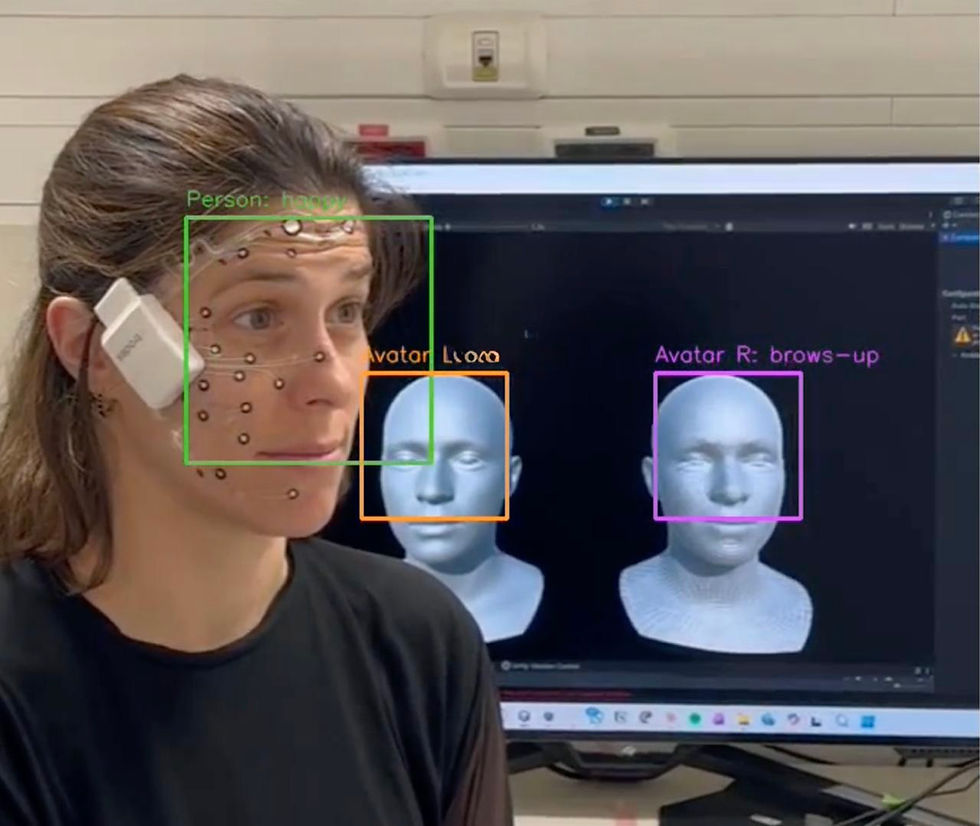
The same philosophy extends well beyond the retina. Across the lab, we are developing soft, wearable systems for recording signals including muscle activity, eye movements, and brain activity, together with machine-learning tools for interpreting these signals during natural behavior.
The broader goal is to move neurotechnology toward interfaces that are less invasive, more wearable, and better integrated into everyday life—from vision restoration and neurorehabilitation to human–machine interaction.
Read the full feature: A Bold Vision for Brain–Machine Interfaces, EU Research, pp. 10–11.


Comments