


Can your face reveal how hard your brain is working?

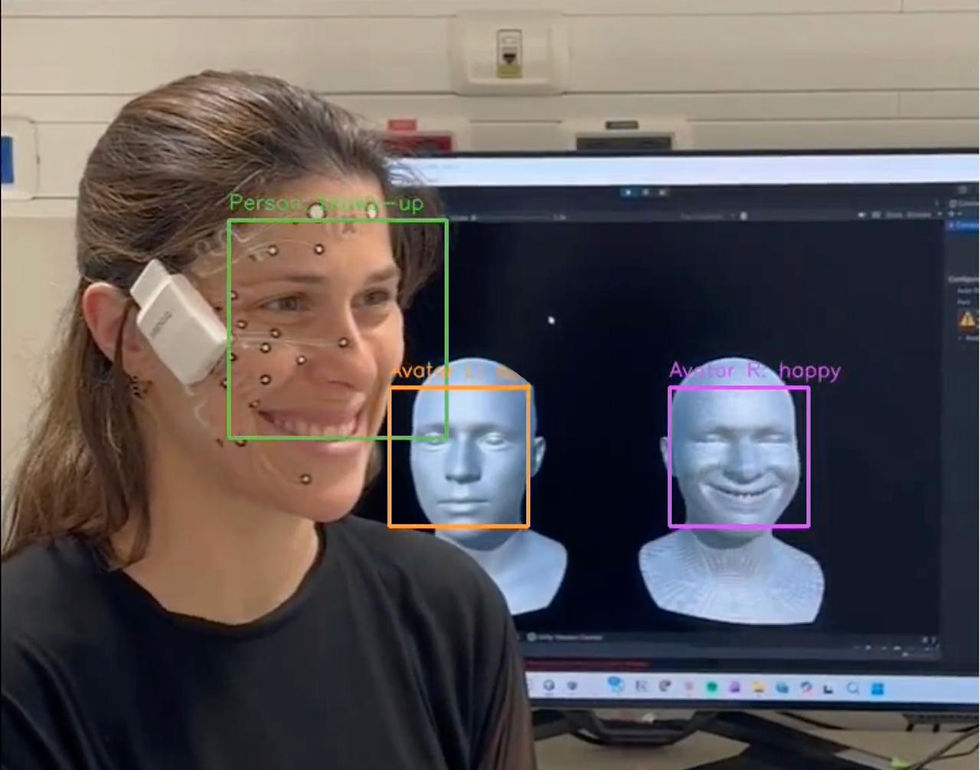
We are excited to share our latest publication in the Journal of Neural Engineering, demonstrating that facial electrophysiological signals provide a rich, multidimensional window into cognitive load.
Rather than relying on a single physiological marker, our study shows that different facial measures—including brain activity, muscle activity, eye movements, and blink dynamics—capture complementary aspects of mental effort. By combining these signals, we achieve a more robust and comprehensive assessment of cognitive load across individuals.
This work highlights the face as a powerful sensing platform for next-generation human–machine interfaces, opening new opportunities for adaptive systems that can respond to the user’s cognitive state in real time. Potential applications span aviation, automotive safety, defense, education, healthcare, and many other domains where monitoring mental workload can improve both performance and safety.
The study also underscores the value of wearable, unobtrusive facial bioelectronics for advancing objective cognitive monitoring outside the laboratory.
Full paper: link

One of the best aspects of Linux is the flexibility it gives users to explore different software environments. From desktop distributions to development https://chennailug.org/ tools, there is always something new to learn. A Linux user group can help people share recommendations and discuss their experiences with various technologies. ChennaiLUG is relevant for anyone looking to explore Linux-related community activities in Chennai. Practical sessions about software installation, customization, and troubleshooting would be useful for beginners and experienced users alike.
This article keeps things relatively simple, which is one of its strongest points. The explanations are accessible, and the overall structure allows readers to locate relevant details without much effort. I would like to see more information about common technical issues and the steps users can take when something goes wrong. Clear troubleshooting advice can save time and reduce frustration. Overall, a practical and regularly updated guide is valuable for people researching unfamiliar websites.
maan win game || Raxi win game || maanwin register ||
The study combines brain activity, muscle FNF activity, eye movements, and blink patterns to measure cognitive load. Which of these facial signals changed the most when people experienced higher mental effort?
When talking about any game, I feel that looking only at the final result is not enough. DM First Game Understanding the gameplay, rules, different situations, and the decisions players make gives a much better overall picture.
The idea that facial signals can capture different aspects of cognitive load was particularly interesting, especially the combination of brain activity, muscle activity, eye movements, and blink dynamics rather than relying on one measurement alone. I found the possibility of using unobtrusive facial bioelectronics outside a laboratory especially intriguing, since it raises questions about how accurately mental effort can be understood during ordinary activities where people are moving, interacting, and concentrating on different things. It also made me think about the varied demands placed on university students, whose days can involve everything from lectures to independent study and Assignment help for University Students. I wonder which facial signal turns out to be the most reliable when someone’s attention is changing…